Asthma & Wheeze Pathway
Published by PIER Network Clinical Review Group • Ratified by Child Health Governance • Last updated: 09-2026
Introduction This guidance is designed to be used in practice to help diagnose and manage children with asthma and pre-school wheeze. Please select if you ar...
Introduction
This guidance is designed to be used in practice to help diagnose and manage children with asthma and pre-school wheeze. Please select if you are managing a child during an acute hospital admission, and require management guidance during and after the admission, or as part of an outpatient review. You will then be directed to the most appropriate guidelines.
Acute Hospital Attendance
This guidance is designed to be used in practice to help diagnose and manage children with asthma and pre-school wheeze. Please click through the menus below to access the pathways and treatment recommendations. Each pathway is able to be downloaded for patient use but please only print when required to ensure you have the latest version available.
Acute Treatment PathwayClick to expand
This pathway is designed for use across Children's Emergency Departments and Paediatric Assessment Units
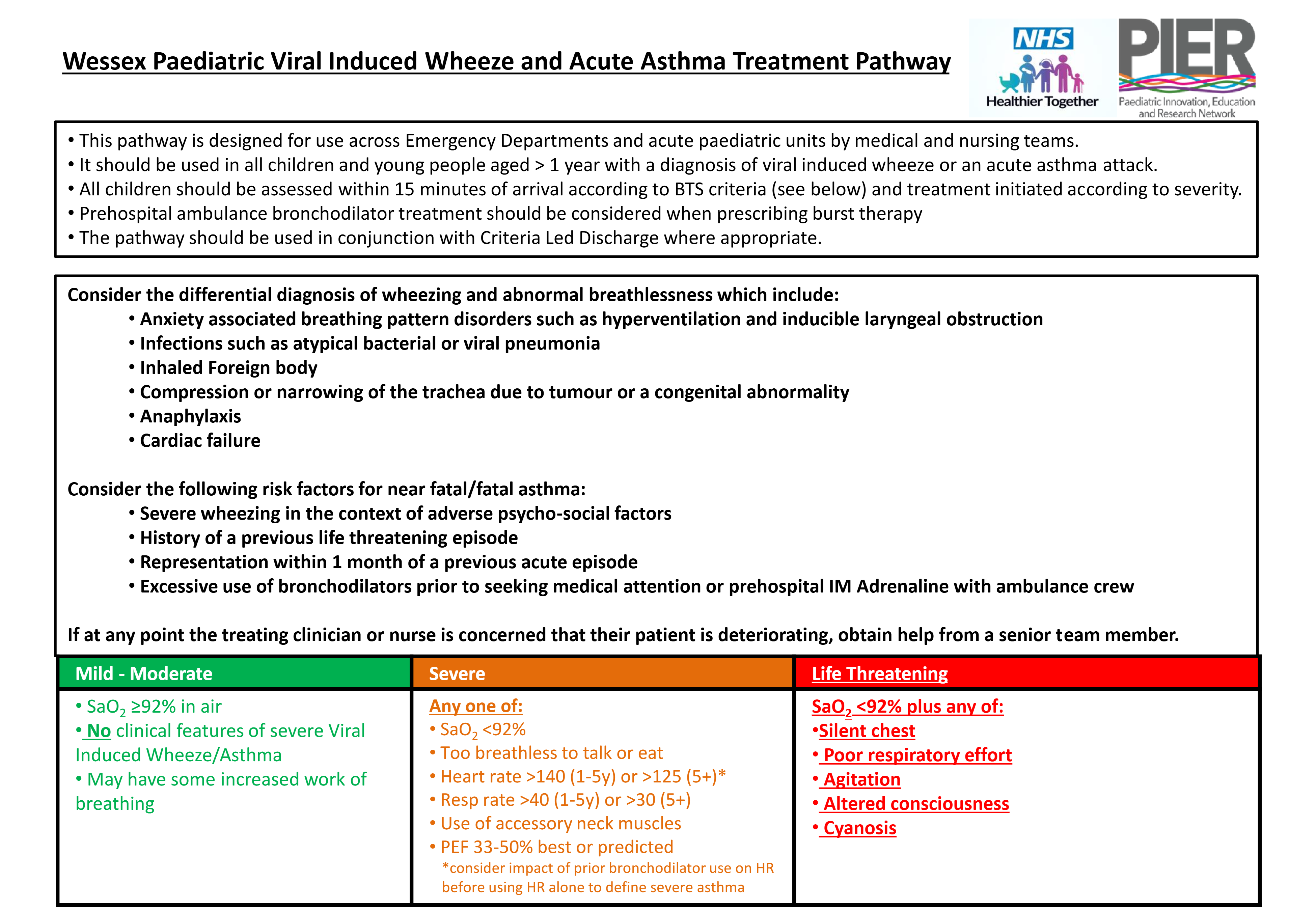 Page 1 of 2
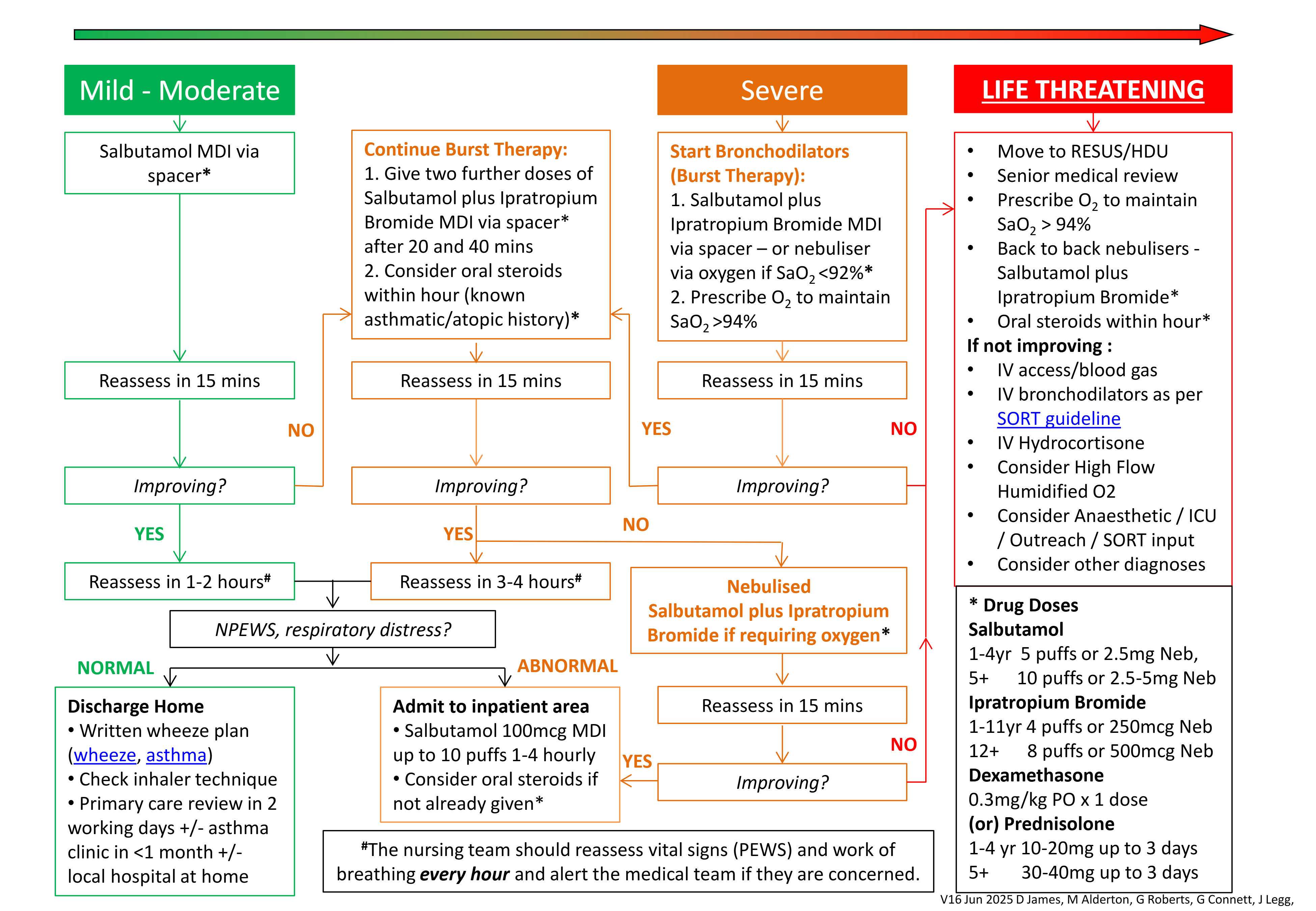 Page 2 of 2
Assessment Units
Discharge AdviceClick to expand
Select from the most appropriate age group
1-5 years
Intermittent pre-school wheeze mostly managed in primary careClick to expand
Recurrent pre-school wheeze which has been managed in hospitalClick to expand
Recurrent pre-school wheeze with interval symptomsClick to expand
6-11 years
Regular inhaled corticosteroid preventer plus as needed Salbutamol relieverClick to expand
Maintenance and Reliever Therapy (MART)Click to expand
12+ years
Regular Inhaled Corticosteroid Preventer Plus As Needed Salbutamol RelieverClick to expand
Maintenance and Reliever Therapy (MART) using Symbicort or Duoresp Spiromax)Click to expand
As needed Maintenance and Reliever Therapy (MART) using Symbicort 100/3 MDIClick to expand
As needed Anti-Inflammatory Reliever Therapy (AIR)Click to expand
Primary Care & Outpatients
This guidance is designed to be used in practice to help diagnose and manage children with asthma and pre-school wheeze. Please select the most appropriate age group below to be taken to the diagnosis and management pathways and the personalised action and treatment plans.
1-5 years
DiagnosisClick to expand
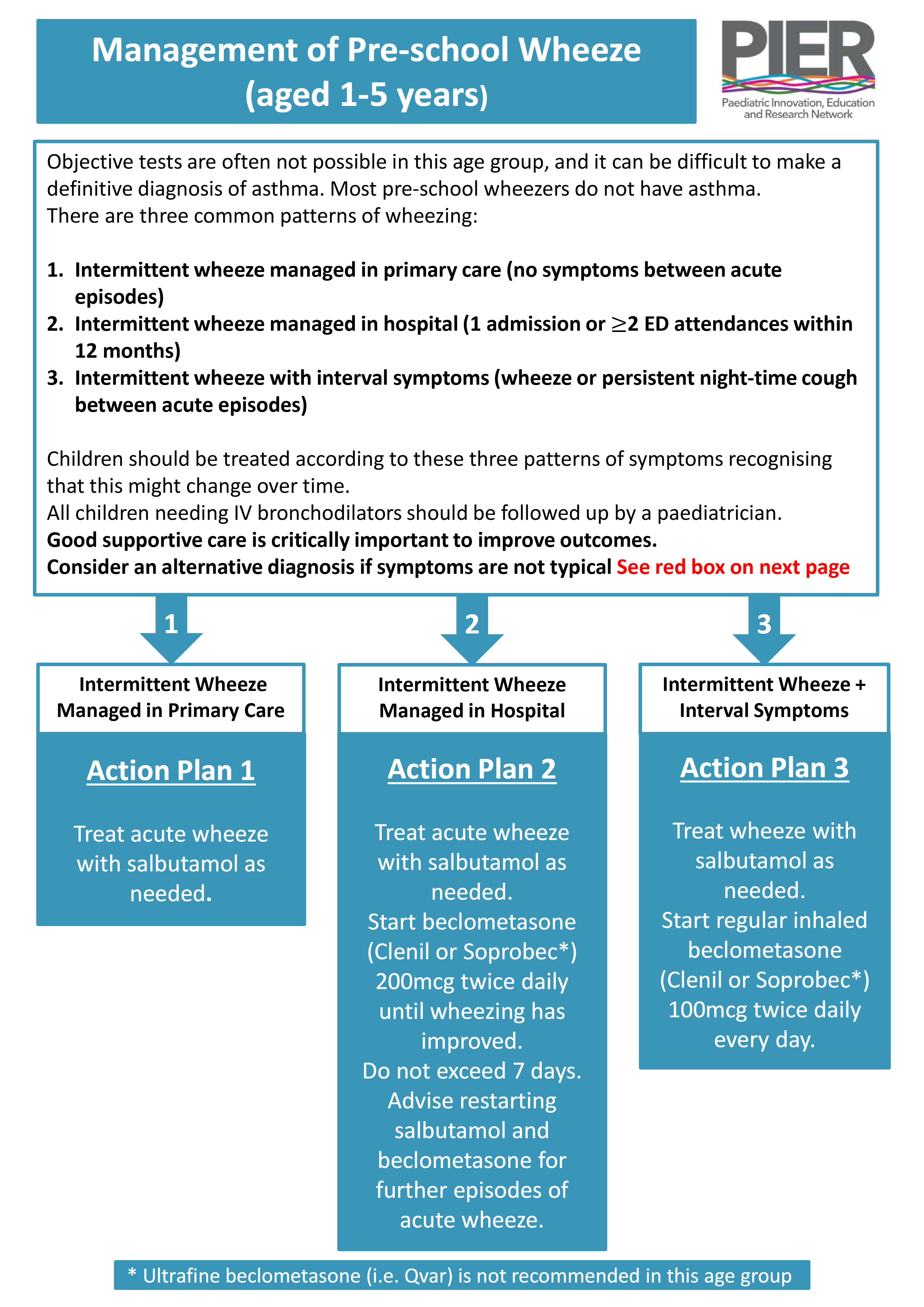 Page 1 of 2
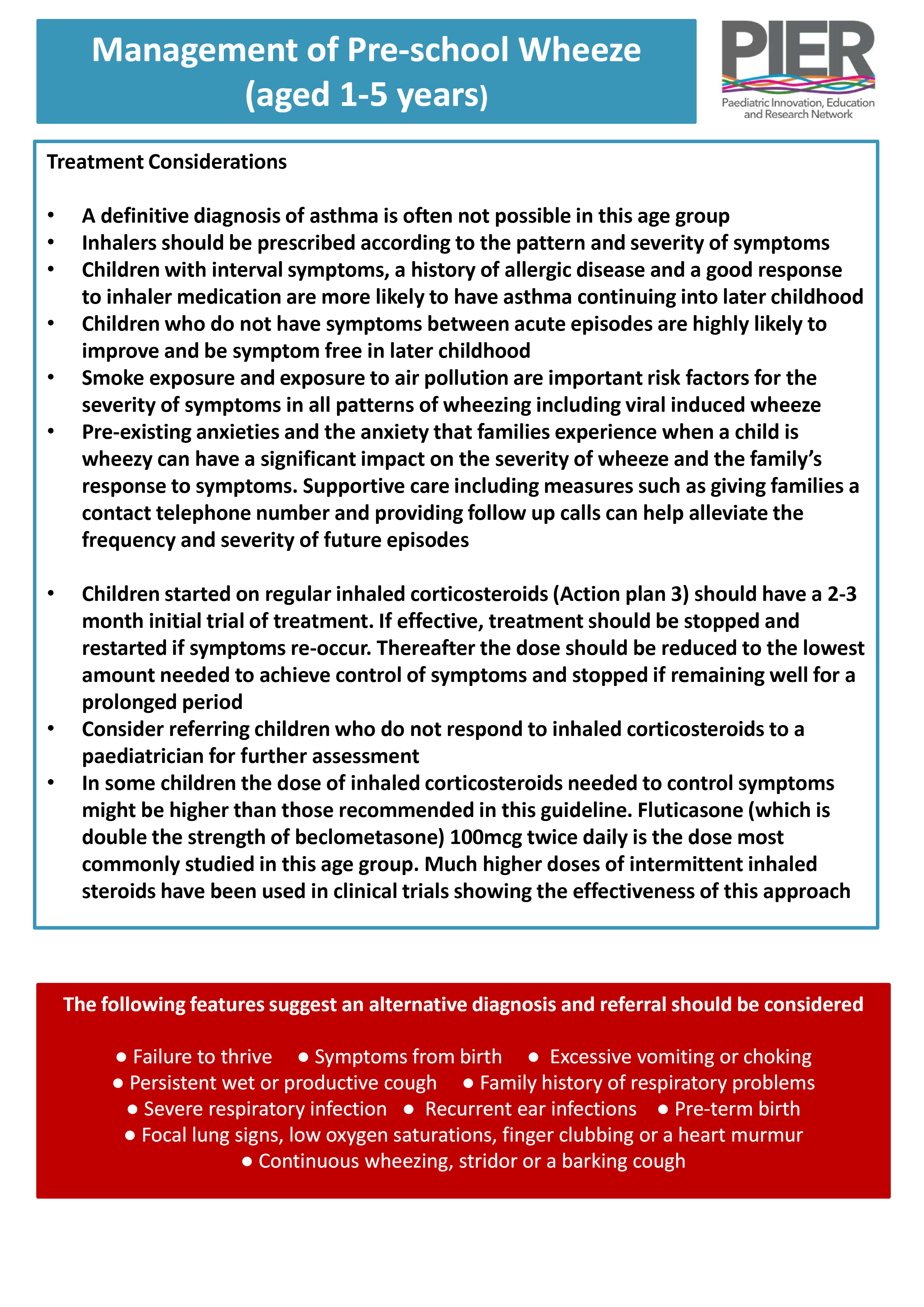 Page 2 of 2
Action PlansClick to expand
Select from the following 3 wheeze action plans
Action Plan 1 - Intermittent pre-school wheeze managed in Primary CareClick to expand
Action Plan 2 - Recurrent pre-school wheeze that has been managed in HospitalClick to expand
Action Plan 3 - For children with intermittent wheeze & interval symptomsClick to expand
6-11 years
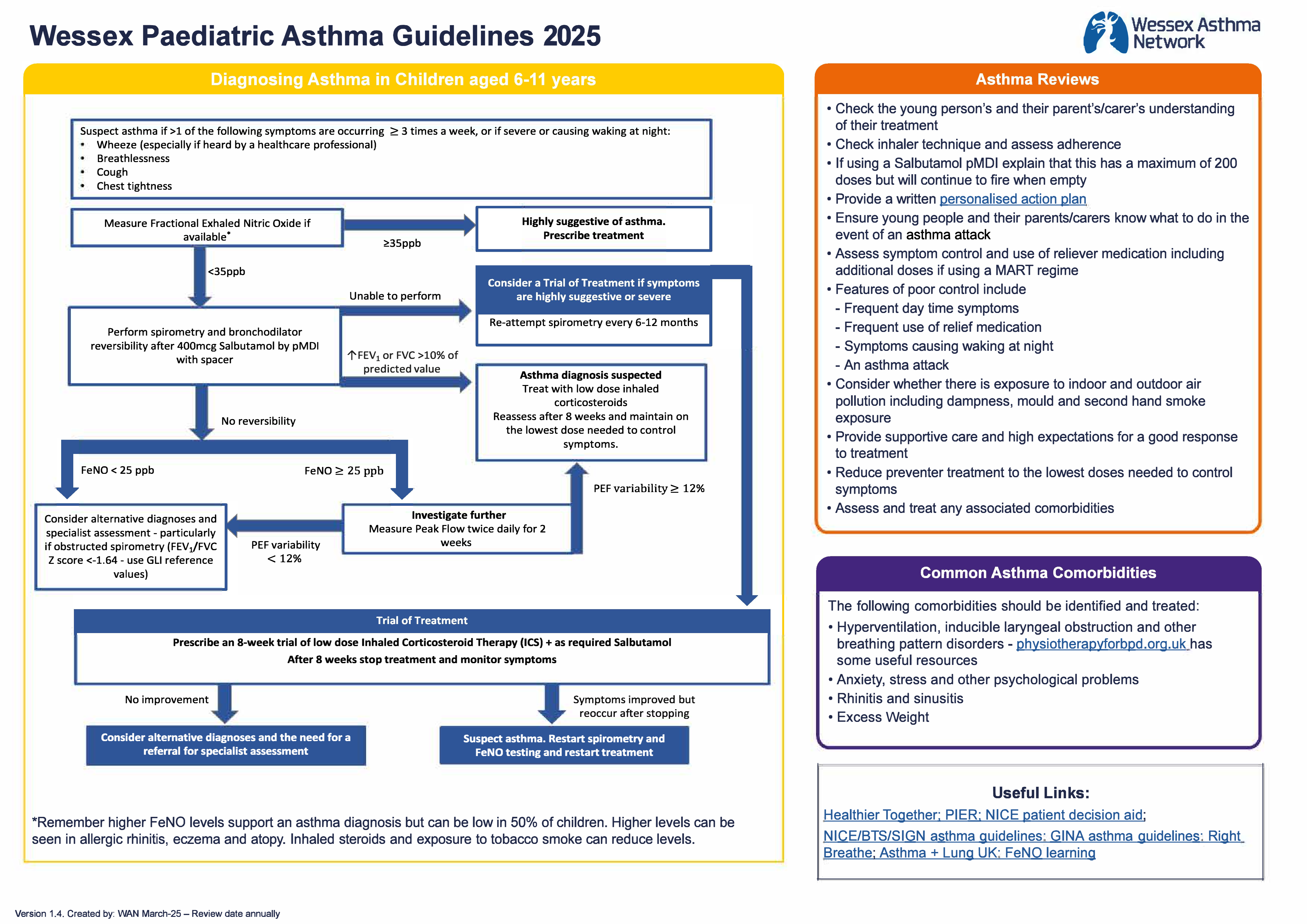
DiagnosisClick to expand
In school aged children, use objective tests whenever possible to support a diagnosis of asthma. If testing is not available, consider a trial of treatment, following the prescribing pathway.
Treatment Prescribing PathwayClick to expand
Most children over 6 years of age can learn to use a dry powder inhaler. Prescribe an MDI and spacer only if this is not possible.
_page_1.png?alt=media&token=679ed8ca-9926-4c5b-a44e-f4bb30cd8ea7)
Inhaler use instructional videos
Pressurised Metered Dose Inhaler with SpacerClick to expand
Soprobec 50
Clenil 50
Flixotide Evohaler 50
Salbutamol pMDI 100
Dry Powder Inhaler - TurbohalerClick to expand
Pulmicort 100
Dry Powder Inhaler - AccuhalerClick to expand
Flixotide Accuhaler 50
How to use your inhaler correctlyClick to expand
Asthma Action PlansClick to expand
Provide an action plan for the preferred treatment option (click for detailed information):
Regular low dose inhaled steroids (dry powder or aerosol) and as needed Salbutamol using aerosol and spacer (typically for children less than 12 years old)
Maintenance And Reliever Treatment (MART) using a dry powder inhaler (typically for young people over 12 years old and a second line option for children 6-11 years old with a poor response to regular low dose inhaled steroid
Inhaler steroids and SalbutamolClick to expand
Maintenance and Reliever Therapy (MART)Click to expand
12+ years
DiagnosisClick to expand
In school aged children, use objective tests whenever possible to support a diagnosis of asthma. If testing is not available, consider a trial of treatment, following the prescribing pathway.

Treatment Prescribing PathwayClick to expand
Most children over 6 years of age can learn to use a dry powder inhaler. Prescribe an MDI and spacer only if this is not possible.
Inhaler Use Instructional Videos
How to use your spacer correctlyClick to expand
Pressurised Metered Dose Inhaler with a SpacerClick to expand
Symbicort 100/3
Duoresp Spiromax 160/4.5
Dry Powder Inhaler - TurbohalerClick to expand
Symbicort 100/6 and 200/6
Asthma Action PlanClick to expand
Provide an action plan for the preferred treatment option (click for detailed information):
Regular low dose inhaled steroids (dry powder or aerosol) and as needed Salbutamol using aerosol and spacer (typically for children less than 12 years old)
Maintenance And Reliever Treatment (MART) using a dry powder inhaler (typically for young people over 12 years old and a second line option for children 6-11 years old with a poor response to regular low dose inhaled steroid
Anti-inflammatory Reliever TherapyClick to expand
Inhaled Corticosteroids PLUS as needed Salbutamol RelieverClick to expand
Maintenance and Reliever Therapy (MART)Click to expand
Children >6years should be able to use a dry powder inhaler (DPI).
Consider Symbicort 100/3 MDI for those unable to use a DPI.
Children with anaphylaxis to milk should not use a dry powder device